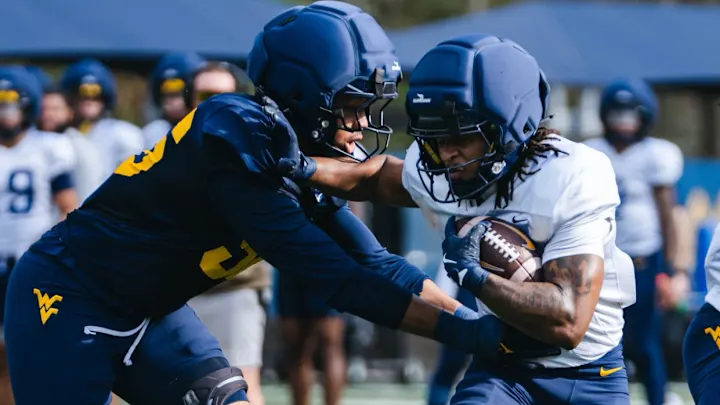
Expectations surrounding the West Virginia Mountaineers remain tempered entering the 2026 season, much like they were a year ago when Rich Rodriguez began his return stint in Morgantown. National observers largely project another challenging campaign for the program, with many analysts doubting whether the Mountaineers can emerge as a serious contender in the Big 12 Conference.
Among the skeptics is CBS Sports, which recently slotted West Virginia 15th in the 16-team Big 12 hierarchy. On the national scale, the outlet ranked the Mountaineers 70th overall in college football, reinforcing the perception that the program remains in rebuilding mode.
In CBS Sports’ Big 12 projections, Texas Tech leads the conference at No. 9 nationally, followed by BYU (15), Utah (22), Houston (27), Arizona (29), Kansas State (30), TCU (34), Arizona State (39), Baylor (50), Iowa State (54), Cincinnati (55), Kansas (56), Oklahoma State (60), and UCF (65). West Virginia sits at No. 70, ahead of only Colorado (73).
The ranking has raised eyebrows among those close to the program, who believe national analysts may be underestimating the strides made internally. Optimism centers on anticipated improvement at quarterback, a reinforced offensive line, and an upgraded receiving corps. Additionally, the Mountaineers welcome the nation’s leading returning rusher, Cam Cook, whose skill set aligns well with Rodriguez’s offensive philosophy.
Still, skepticism from outside observers is understandable. West Virginia experienced significant roster turnover and will rely on players who lack extensive Power Five experience. On paper, that combination can suggest volatility and uncertainty heading into a new season.
However, Rodriguez’s aggressive roster overhaul reflects a calculated strategy rather than desperation. After inheriting a group he deemed insufficient to compete at a high level in the Big 12, he reshaped the roster for the second consecutive year. Last offseason’s additions leaned heavily on seniors and lower-division transfers due to portal timing constraints.
This time, the approach differed. West Virginia secured a top-25 high school recruiting class alongside a top-25 transfer portal haul, signaling a stronger talent infusion. While the Mountaineers remain a work in progress, the overall caliber of incoming players marks a notable upgrade. Internally, there is confidence that the team will be competitive and positioned for bowl eligibility — and perhaps outperform projections that place them behind programs such as Iowa State, Cincinnati, Kansas, and UCF.