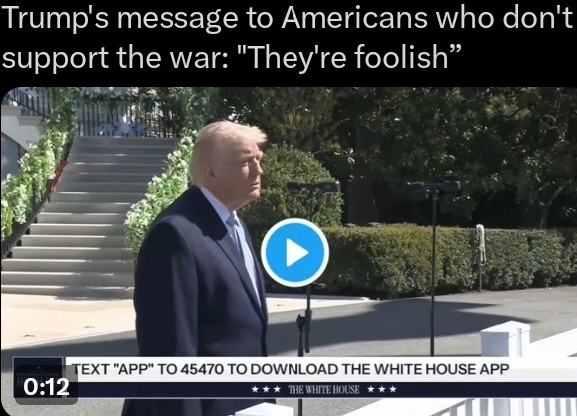
President Donald Trump sharply criticized Americans who do not support the ongoing U.S. military campaign against Iran, calling them “foolish” during White House remarks on Monday.
In the widely circulated video clip, Trump stated that opposition to the war ignores the central issue: preventing Iran from obtaining a nuclear weapon. “They’re foolish,” he declared when addressing skepticism about the conflict, which involves U.S. and Israeli strikes targeting Iranian energy infrastructure and nuclear sites.
The comments were made outdoors on the White House grounds amid lush greenery and stone steps, with microphones positioned for a formal address. A brief 12-second excerpt has rapidly spread across social media platforms, amplified by accounts critical of the administration.
Trump emphasized that the war “is about one thing — Iran cannot have a nuclear weapon,” framing the operation as essential for national and regional security. He suggested that a potential 45-day ceasefire remains under discussion, but stressed the need for decisive action to degrade Tehran’s capabilities.
While supporters view the remarks as a firm demonstration of resolve against a dangerous adversary, detractors — including some Republican voices grouped under accounts like “Republicans against Trump” — argue the language dismisses legitimate concerns over escalation, costs, and the human toll of prolonged conflict.
The statement comes at a time of divided public opinion, with many Americans expressing fatigue over foreign entanglements and preferring diplomatic paths or a quicker withdrawal of U.S. forces. Polls continue to show mixed support for the military operations.
White House officials have reiterated that the campaign targets Iran’s nuclear ambitions and aims to restore stability, with Trump previously indicating that successful objectives could lead to reduced involvement.
As the clip gains traction online, it reignites broader conversations about leadership style, the boundaries of dissent during wartime, and how presidential rhetoric shapes national discourse on security matters. Developments in the Iran conflict are expected to remain a dominant focus in the coming days.