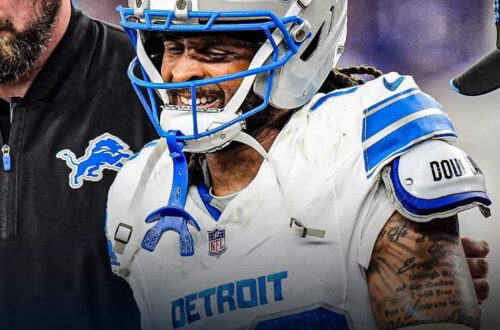
The Detroit Lions suffered a major setback this week as standout defensive back Brian Branch has reportedly been ruled out for the remainder of the season with a torn Achilles. The injury occurred late in the team’s most recent game and immediately raised alarm among coaches and medical staff. Further evaluation confirmed the severity, ending Branch’s promising campaign prematurely.
Branch had been one of the anchors of Detroit’s defense, providing versatility and stability across the secondary. His ability to move seamlessly between safety and slot coverage gave the Lions an important strategic advantage. Losing him at this stage of the season removes a key component of the team’s defensive identity.
Before the injury, Branch was in the midst of a strong season, consistently ranking among the team leaders in tackles, pass breakups, and impact plays. Coaches frequently praised his instincts and leadership on the field, noting his growing influence on younger members of the defense. His absence leaves a noticeable void not just in production but also in communication.
The Lions were already dealing with depth challenges in the secondary, making Branch’s injury even more significant. Several defensive backs have battled injuries in recent weeks, forcing the team to rely on backups and practice-squad call-ups. With another starter now sidelined, Detroit faces increased pressure to adapt its defensive approach.
In replacing Branch, the Lions will likely employ a committee-style rotation, leaning on players who have seen limited action this season. While some reserves have shown potential, none replicate Branch’s unique combination of versatility and explosiveness. The coaching staff may also be forced to simplify coverage schemes to avoid exposing inexperienced players to mismatches.
Strategically, Detroit is expected to modify its defensive game plan as it adjusts to the loss. Coaches may put a greater emphasis on zone coverage and stronger support from the linebacking group to reduce pressure on the depleted secondary. Such adjustments, while necessary, could alter the overall aggressiveness of the defense.
The timing of the injury is especially difficult for a Lions team still fighting for playoff positioning. With several critical games remaining, defensive consistency will be essential, and losing a key playmaker complicates the team’s path forward. Each upcoming matchup now carries added weight as Detroit works to stay competitive.
Looking ahead, Branch’s recovery will likely extend well into the offseason, as Achilles injuries require lengthy rehabilitation and careful management. The Lions are expected to prioritize his long-term health, given his importance to the franchise’s defensive future. His progress will be closely monitored as the team prepares for next season.
For now, the Lions shift to a next-man-up mentality, hoping to maintain momentum despite the setback. While Branch’s absence presents significant challenges, Detroit aims to remain resilient by maximizing its remaining depth and adjusting its defensive identity. How well the team adapts will play a major role in determining the outcome of the rest of its season.