Justin Timberlake Didn’t Kiss Anyone. So Why Is That Photo Everywhere?
I have stared at the photo for way too long.
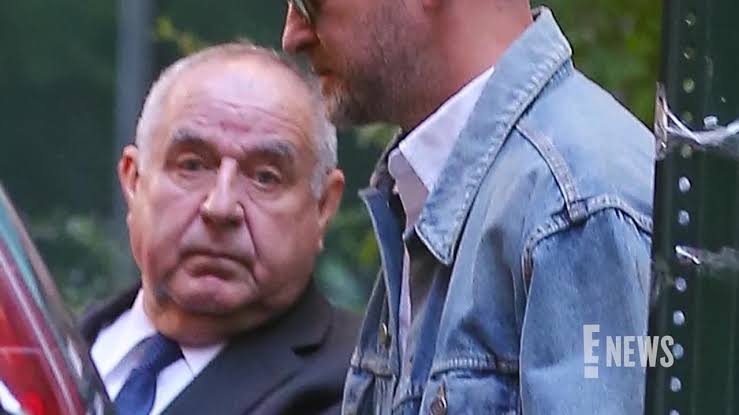
You have probably seen it too. Justin Timberlake, denim jacket, sunglasses that cost more than my rent, mouth open mid-sentence in New York. And right behind him, perfectly aligned, a man’s bald head exactly where Justin’s lips appear to be. It looks intimate. It looks awkward. It looks like Justin Timberlake is kissing his chauffeur on the head.
Except he wasn’t. It was never a kiss.
That should be the end of the story, right? An optical illusion, a bad angle, we laugh and move on. But instead, this picture became a full-blown news cycle this week. E! News did a segment. WDC News 6, Ranzware, NY Morning Star on October 16th all ran the same headline. Justin himself had to jump on Instagram on October 7th and say, “but why do y’all have me looking like I kissed this man”.
And that’s where I got stuck. Not on the kiss. On the fact that he had to explain it at all.
Let’s start with what actually happened
The photo came from Backgrid, the pap agency that basically owns the sidewalks of New York and LA. Their photographer caught Timberlake stepping out — clad in a denim jacket and sunglasses — in New York, and the framing did the rest. The man in front of him is not a lover, not a friend. Multiple outlets identified him as his chauffeur / driver.
It’s a classic forced perspective trick. If you shift two inches to the left, there’s a foot of air between them. If you shift two inches to the right, it’s a normal street photo. But the camera didn’t shift.
What fascinates me is what happened next. Justin didn’t ignore it. He couldn’t. He reposted it and made a joke out of it. And that is the most Justin Timberlake thing possible.
This is a man who has spent 25 years trying to control his narrative — from *NSYNC boy band choreography, to the Super Bowl fallout, to the Britney memoir era, to the DUI arrest last year. He knows that if he doesn’t comment first, the internet will write the caption for him.
So he wrote it himself.
But here are the questions nobody is asking, because we are too busy laughing at the screenshot:
1. Why do we love a “gotcha” photo that isn’t a gotcha at all?
Think about it. There was zero evidence of a kiss. No video. No second angle. Just one frame that looked weird. And yet our brain did what brains do — we filled in the story. We love a celebrity being caught. It makes them human. It makes them sloppy. A 44-year-old former boy band icon kissing his driver on the street? That’s a headline that pays rent.
The photo was never intimate. Our reaction was. That says more about us than about him.
2. Who benefits when a nothing-photo becomes everything?
Backgrid posted the original. Then every entertainment outlet aggregated it. E! News ran it on Oct 8th, and it was still trending on news locker sites on Oct 16th. That’s an eight-day lifespan for a photo where nothing happened.
This is the paparazzi economy in 2026. You don’t need a scandal anymore. You just need an angle that looks like a scandal for three seconds on a For You Page. The illusion is the product. Backgrid gets the clicks, the outlets get the cheap content, we get the laugh, Justin gets to look like a good sport.
Everyone wins, except maybe truth.
I checked — there is no second photo. No video where he actually leans in. If he had really kissed the man, do you think Backgrid would have only given us one frame?
3. Why does Justin Timberlake have to apologize for an optical illusion?
This is the part that made me pause my writing and go make coffee.
He wrote, “but why do y’all have me looking like I kissed this man.” Read that again. It’s not just a joke. It’s a defense. It’s a man saying, “Please don’t turn this into something else.”
We live in a time where a straight male pop star kissing another man on the head would still — in 2026 — be treated as either a scandal, a coming-out, or a meme. Which box would the internet have put him in? All three at once?
His quick joke was strategic. If he laughs first, we can’t laugh at him. If he points out the illusion — that it looked like he was kissing his chauffeur thanks to an optical illusion — he kills the second headline before it gets written: “IS JUSTIN TIMBERLAKE…?”
We pretend we are progressive, but we still make a man explain a photo where he didn’t even touch anyone.
4. The human thing we are missing
Look at the photo again, minus the joke.
A man is getting out of a car in New York. It’s October. It’s probably cold. He has sunglasses on. He is probably telling his driver “thanks” or “give me two minutes.” The driver is probably holding the door. It’s a boring, everyday interaction between a rich guy and a guy who works for him.
But we erased the driver. We literally turned a working person into a prop for a kiss joke. No one asked his name. No one blurred his face. He became “the bald head.” That’s the part that feels gross when you sit with it for more than 10 seconds.
Justin humanized him a bit by calling him “this man” instead of just ignoring him. But the internet didn’t. We just kept sharing.
So, what did Justin Timberlake actually do?
He didn’t kiss a man on the head. He walked down a street and got photographed at the exact wrong millisecond. He then did what every celebrity who wants to survive the meme era has to do: he posted it himself, made the joke first, and controlled the fallout.
It’s smart. It’s sad. And it’s incredibly 2026.
If you came here for confirmation that Justin Timberlake had a secret New York street romance with his chauffeur, I’m sorry. He didn’t. If you came here to laugh at a silly photo, you can — I did too.
But next time you see a photo that looks too perfect — a pop star kissing a stranger, a politician slipping, a model falling — ask the question the photo doesn’t want you to ask:
Who took it? Why did they post that exact frame? And why did I believe it before I even blinked?
Because the kiss never happened. The illusion that it did — that was the real story.