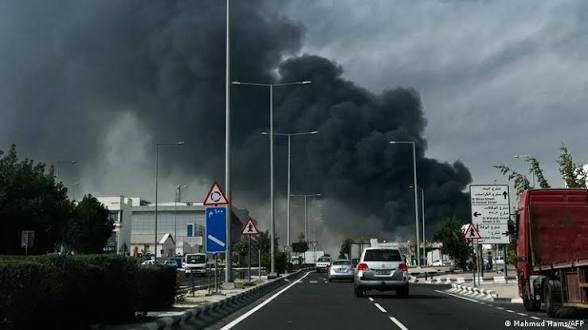
Six members of the United States military were killed after a refueling aircraft crashed in western Iraq following an accidental mid-air collision, U.S. officials confirmed on Friday. The incident occurred Thursday night and comes as the ongoing conflict involving Iran enters its second week, with no clear signs of de-escalation.
The crash has increased the total number of American military personnel killed in the conflict to 13. Initial reports from officials had suggested that two crew members may have survived the accident, but later confirmation indicated that all six personnel aboard the aircraft died in the crash.
News of the fatalities emerged as U.S. Defense Secretary Pete Hegseth addressed reporters about developments in the conflict. Hegseth stated that Iran’s Supreme Leader, Mojtaba Khamenei, sustained injuries during airstrikes carried out on the first day of the war and may have been permanently disfigured.
The escalating hostilities have also begun to affect the U.S. economy. Nationwide fuel prices have risen, with the average cost of gasoline reaching $3.644 per gallon on Friday. In several western states, prices have already surpassed the $4 per gallon mark, reflecting growing pressure on energy markets.
Meanwhile, the humanitarian toll of the conflict continues to rise. Iranian human rights organizations report that more than 1,200 civilians have been killed as a result of extensive U.S. and Israeli airstrikes across Iran. The strikes have targeted multiple locations as part of the ongoing military campaign.
The violence has also spread into neighboring Lebanon, where Israeli operations against the militant group Hezbollah have intensified. According to reports, more than 600 people have died in the country as the fighting expanded, forcing hundreds of thousands of residents to flee their homes.
In Beirut, repeated explosions have struck densely populated areas of the capital, adding to the widespread destruction and displacement. The escalating conflict in Lebanon has further complicated an already volatile regional situation.
Beyond the battlefield, the war has disrupted global markets and trade routes. Oil prices have surged after Iran closed the strategic Strait of Hormuz, a critical corridor for global energy shipments, while launching hundreds of drones and ballistic missiles toward Israel and several Gulf states.