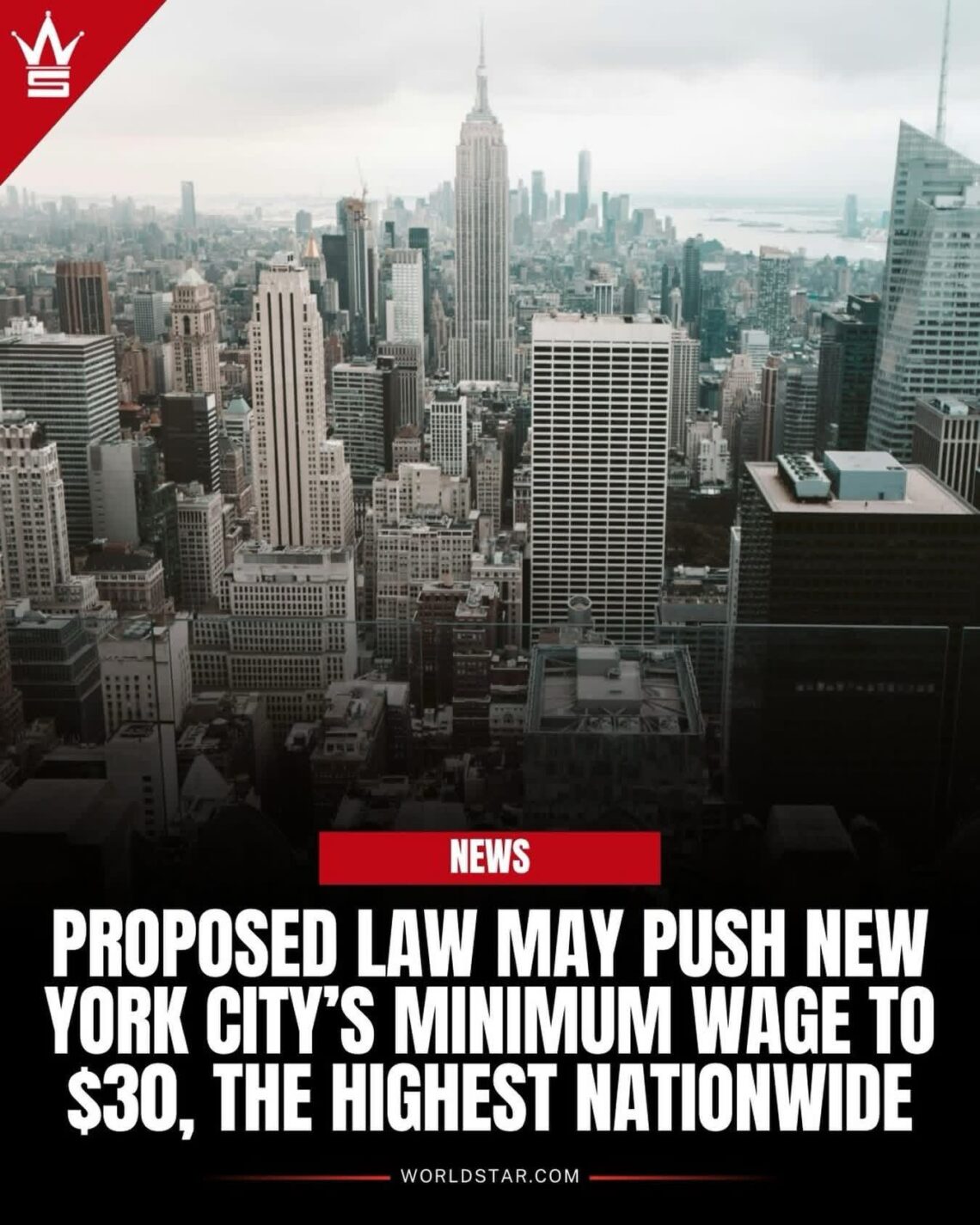
Members of the New York City Council have introduced a proposal to significantly increase the city’s minimum wage, suggesting a gradual rise to $30 per hour over the next several years. If approved, the measure would nearly double the current minimum wage of $17 an hour, marking one of the most ambitious wage proposals in the United States.
According to reports, the bill outlines a phased implementation schedule designed to allow businesses time to adjust. Under the proposal, larger employers would be required to reach the $30-per-hour minimum by 2030, while smaller businesses would have until 2031 to comply.
Supporters of the measure argue that the increase is necessary to keep pace with the rising cost of living in New York City. Lawmakers backing the bill say many workers struggle to afford housing, transportation, and other essential expenses despite earning the current minimum wage.
Advocates also contend that a higher wage floor would help reduce income inequality and improve economic stability for low-income workers. They believe that increasing wages could stimulate local spending and strengthen the city’s overall economy.
However, the proposal has already drawn concern from some business groups and employers. Critics warn that such a substantial increase in labor costs could place additional pressure on small businesses and potentially lead to higher prices, reduced hiring, or job cuts.
Business organizations have urged city leaders to carefully assess the potential economic impact before adopting the measure. Some industry representatives argue that while wage increases may be necessary, a near doubling of the current rate could create operational challenges for many companies.
The bill will likely face extensive debate within the City Council in the coming months. Lawmakers are expected to review economic analyses, gather feedback from labor groups and business leaders, and hold public hearings before any final decision is made.
If enacted, the legislation would position New York City among the jurisdictions with the highest minimum wage standards in the country. The proposal reflects growing national discussions about wage policies and how governments can address the widening gap between earnings and living costs in major urban centers.